A Predictable Path From "We Have a Problem" to "It's Working."
Most low-voltage, ICT, and physical security projects fail in the seams — between scoping and design, between design and install, between install and the day you actually need support. Our five-stage model exists to eliminate those seams. Every engagement runs the same way, whether it's a $20,000 camera add or a $2M nurse call replacement across a campus.
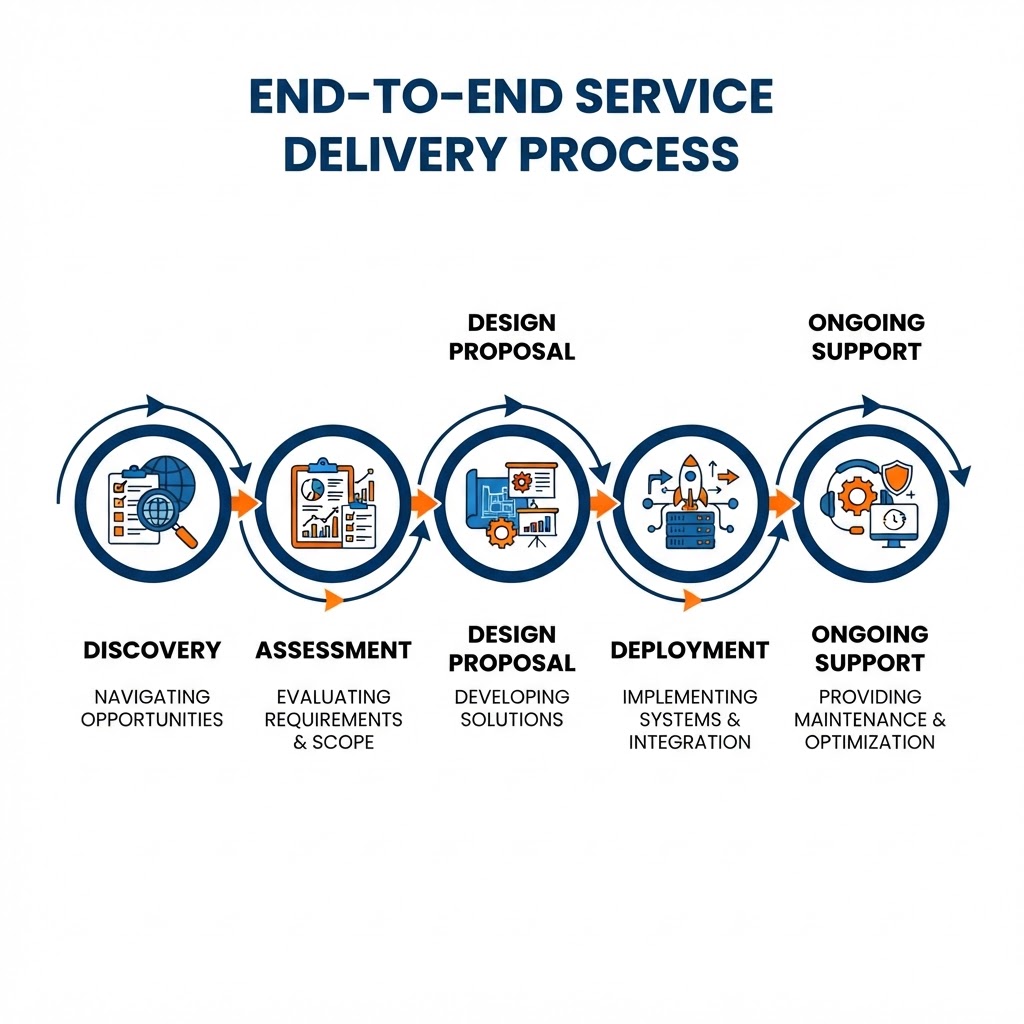
Stage 01
Discover
1–2 weeksYou get
A discovery brief — current-state map, identified gaps, regulatory triggers (UL 1069, NFPA 72, HIPAA, FGI), and a short list of options ranked by cost, disruption, and outcome.
What we need from you
Site access, a 30-minute conversation with the clinical or operations lead, and existing drawings if they exist.
Stage 02
Design
2–4 weeksYou get
Construction documents suitable for permit, bid, or build, plus a written narrative explaining the design intent and the alternates considered.
What we need from you
Approval of the discovery brief and any final scope adjustments.
Stage 03
Estimate
3–7 daysYou get
A line-item estimate, a payment schedule, a project schedule with critical-path callouts, and a fixed expiration date so the number means something.
What we need from you
PO or signed proposal.
Stage 04
Install
VariesYou get
Daily progress reports, weekly status meetings, end-of-shift cleanliness, and zero surprises at invoice time.
What we need from you
A single decision-maker for the inevitable in-the-field choice.
Stage 05
Manage
OngoingYou get
A closeout package — record drawings, training videos, credentials, parts list, escalation matrix, and the first-year service calendar.
Project Timeline at a Glance
Discover
1–2 weeks
BriefDesign
2–4 weeks
DrawingsEstimate
3–7 days
QuoteInstall
Varies
SystemManage
Ongoing
UptimeDiscover · 1–2 weeks
BriefDesign · 2–4 weeks
DrawingsEstimate · 3–7 days
QuoteInstall · Varies
SystemManage · Ongoing
UptimeThe average Nexus project moves from Discover kickoff to Install start in 6–10 weeks. A comparable open-RFP path is typically 16–28 weeks. Cooperative-contract clients sit at the fast end of that range.
Learn about cooperative purchasingHow We're Different at Each Stage
Same industry. Same RFPs. Very different execution.
| Stage | Typical Integrator | Nexus |
|---|---|---|
| Discover | "Send us the spec." | Walk the site, read the workflow. |
| Design | Manufacturer-supplied BOM. | Stamped drawings, alternates, code review. |
| Estimate | One number, no detail. | Line-item, contract pricing, expiration date. |
| Install | "We'll let you know when we're there." | PM + daily reports + ICRA-trained crews. |
| Manage | Call when it breaks. | Monitored, patched, vendor-managed. |
Start a Project
Tell us what you're working on — we'll confirm scope, recommend the right discovery track, and respond within one business day.
847.443.9900